
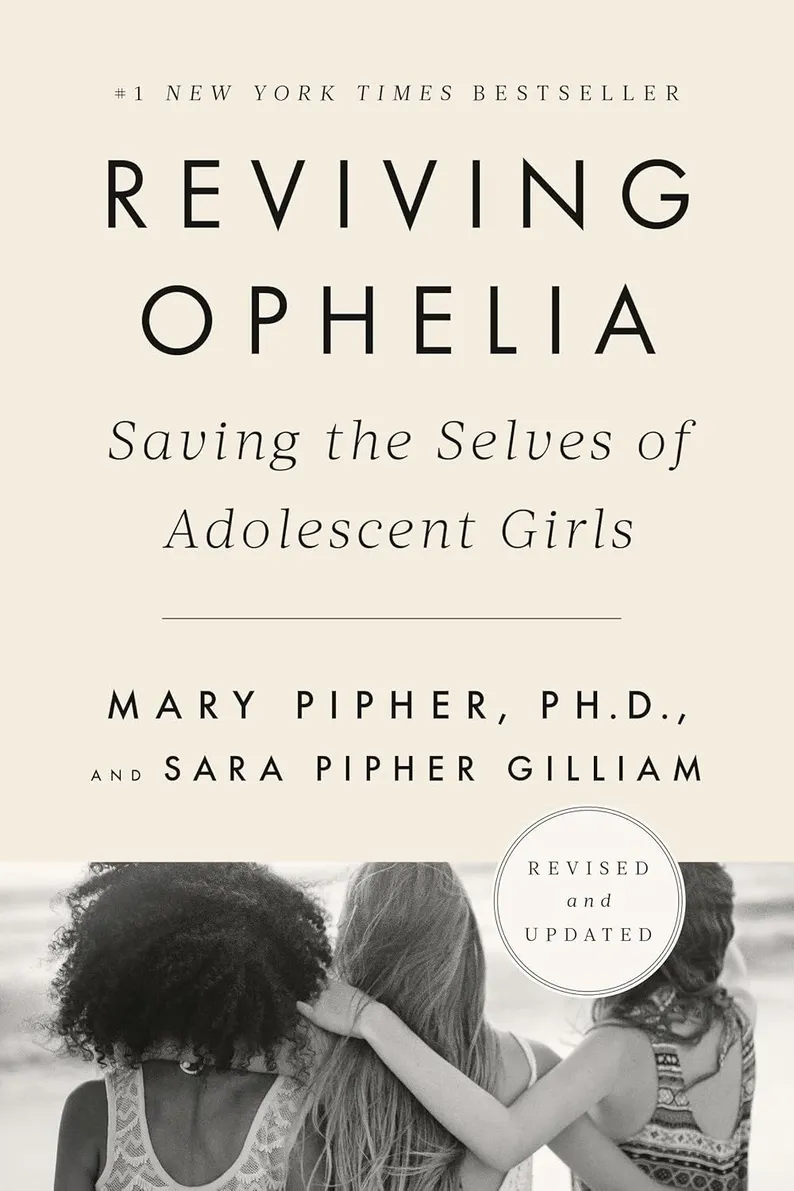
Reviving Ophelia: Saving the Selves of Adolescent Girls by Mary Pipher was first published in 1994. The 25th-anniversary edition, co-authored with her daughter Sara Pipher in 2019, updates the text for modern contexts like social media and ongoing pressures. This is a landmark book in adolescent psychology—warm, eye-opening, and full of real stories from Pipher's therapy practice. It's often called a "call to arms" for anyone raising, teaching, or working with teen girls, because it shines a light on why so many confident, spirited pre-teen girls seem to lose themselves when they hit adolescence.
Pipher's core idea is that American culture acts like a "girl-poisoning" storm that hits girls hard right at the vulnerable transition into womanhood. She likens adolescent girls to "saplings in a hurricane"—fragile young trees that can be bent or broken by powerful winds before their roots are deep enough to hold them steady. Pre-adolescent girls are often bold, authentic, curious, and full of life—they're "tomboys," adventurers, dreamers who aren't yet weighed down by gender expectations. But around puberty (roughly ages 11–14), a developmental "Bermuda Triangle" kicks in: biology, family dynamics, and especially a sexist, look-obsessed, media-saturated culture converge to pressure them relentlessly.
The result? Many girls split off from their true selves and develop a "false self" to survive and be accepted. They start asking not "Who am I? What do I want?" but "What do others want me to be? How can I please boys, fit in, look perfect?" This leads to plummeting self-esteem, depression, anxiety, eating disorders, self-harm, substance use, early sexual activity (often without emotional readiness), academic drop-off (especially in confidence-heavy areas like math/science), and a general loss of vitality, optimism, and assertiveness. Pipher stresses that these aren't just "teen issues" or "family problems"—they're largely cultural: unrealistic beauty standards, sexual objectification starting young, violence/sexism/harassment normalized in media and schools, and a consumerist push to define worth by appearance and approval.
She draws heavily from her clients' voices—raw, honest stories from girls navigating divorce fallout, abusive relationships, body hatred, peer pressure, and the constant message that their value lies in being thin, sexy, and compliant. (The book is rich with these case examples, making it feel personal rather than abstract.) Pipher notes that while feminism empowered adult women in many ways, adolescent girls were left exposed to intensified cultural forces without the tools or support to resist them.
The hopeful part—and the "reviving" in the title—is that we can help girls hold onto or reclaim their authentic selves. Pipher doesn't offer a rigid program but shares practical, compassionate strategies for parents, therapists, educators, and communities:
- Providing safe, nurturing relationships where girls feel truly seen and valued beyond looks or performance.
- Encouraging activities that build competence, creativity, and independence (sports, arts, academics, outdoor adventures).
- Teaching media literacy and critical thinking about cultural messages.
- Normalizing emotions and pain instead of pushing girls to suppress or "fix" them quickly.
- Strengthening family connections, especially mother-daughter bonds, as anchors.
- Advocating for broader cultural change—less objectification in media, better sex education, protection from harassment, and environments that celebrate girls' full humanity.
In the updated edition, Pipher and her daughter address what's changed (e.g., social media's amplifying effect on comparison and sexualization) and what's stubbornly the same (the core need for love, simplicity, and authentic connection). They reaffirm that prevention—through supportive adults and healthier culture—is far more powerful than later intervention.
In therapy, this book is incredibly validating: It helps parents stop blaming themselves ("It's not just us—it's the culture") and shifts focus to empowerment rather than pathologizing the girl. It reframes "difficult" teen behavior as often a protective response to overwhelming pressures, and it reminds us that with the right support, girls can weather the storm and emerge stronger, more whole, and true to themselves.
Does this ring true for anything you're seeing or remembering—from your own teen years, a daughter, niece, or client? Maybe a specific pressure like body image or social media that feels especially heavy? We could unpack how some of these ideas might apply right now, or even brainstorm small ways to foster that "true self" resilience. It's powerful stuff—Pipher's warmth makes the tough truths feel hopeful rather than hopeless.