
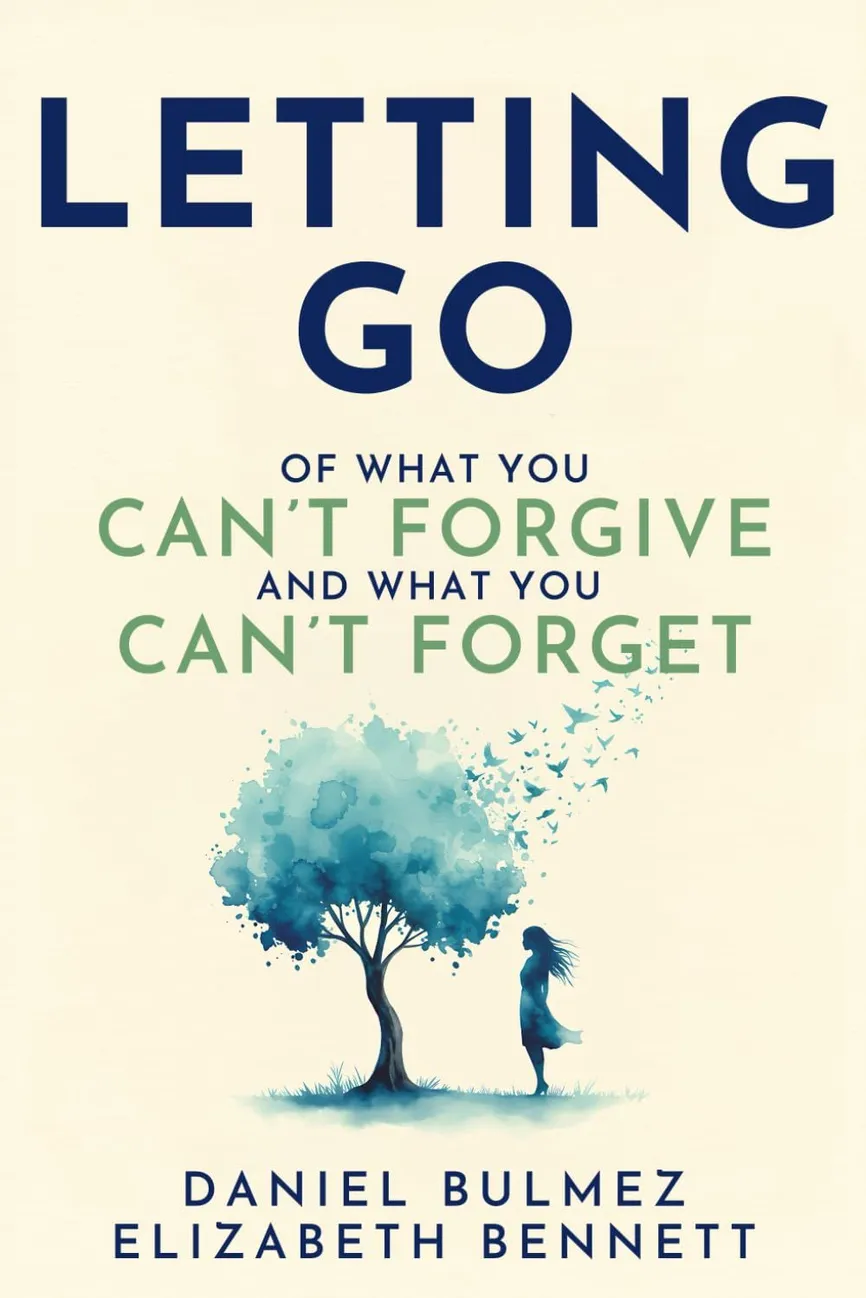
Letting Go: Of What You Can't Forgive And What You Can't Forget by Daniel Bulmez is a relatively recent, compassionate self-help guide focused on healing from deep, stubborn emotional wounds—those hurts that feel impossible to forgive or impossible to erase from memory. It's written in a direct, empathetic tone, blending personal insight, practical strategies, and a gentle push toward freedom without forcing unrealistic quick fixes or spiritual mandates. Bulmez draws from a broad, globally minded perspective (he's lived in multiple countries), making it feel accessible and human rather than preachy.
The book's central message is liberating yet realistic: You don't have to forgive in the classic sense (excusing, reconciling, or forgetting) to find peace, and you don't have to erase painful memories to move forward. Many people get stuck because they believe true healing requires both full forgiveness and complete forgetting—when neither feels possible, resentment festers, and life stays shadowed by the past. Bulmez reframes this: Letting go is about releasing the emotional grip the wound has on you—reclaiming your peace, power, and sense of self—while still acknowledging what happened. It's not denial or minimization; it's choosing not to let the hurt define or control your present and future.
He explores why these wounds linger so powerfully: They often tie into core identity, trust, safety, or worth. When betrayal, abuse, abandonment, or profound injustice hits, the mind replays it as a protective mechanism ("Never again"), but that loop becomes a prison. The book validates the rage, grief, confusion, and exhaustion that come with trying (and failing) to "just forgive." Bulmez emphasizes that forcing forgiveness prematurely can backfire, creating more shame or self-blame.
The healing path he outlines is gradual and practical, centered on reclaiming agency:
- Confronting the wound — Facing the reality of what happened without sugarcoating or endless rumination. This includes naming the pain, validating its impact, and grieving the losses (of innocence, relationship, self-trust, etc.).
- Shifting from forgiveness to release — Redefining forgiveness not as approval or reconciliation, but as an internal decision to stop carrying the debt. He offers ways to process resentment without excusing the other person's actions—letting go for your freedom, not theirs.
- Working with memory — Tools to stop memories from hijacking you (e.g., mindfulness techniques, reframing narratives, creating emotional distance) so the past becomes something that happened rather than something that keeps happening.
- Rebuilding self — Practical steps to restore boundaries, self-compassion, trust in yourself, and joy. This includes exercises for emotional regulation, journaling prompts, boundary-setting, and small acts of self-nurturing to rebuild a sense of power.
- Preventing cycles — Recognizing patterns so old wounds don't keep reopening in new relationships or situations.
The book is compassionate toward people who feel "stuck"—it normalizes that healing from profound hurt takes time, may involve setbacks, and doesn't require you to become best friends with the person who hurt you (or even speak to them). Bulmez stresses personal empowerment: The power to let go lives in you, not in the other person's apology or change.
In therapy terms, this book aligns well with trauma-informed approaches and acceptance-based work (like ACT or parts of EFT). It reduces the pressure of "should forgive" that can feel shaming, and instead invites curiosity about what holding on protects (e.g., a sense of justice, identity as the wronged one) while gently guiding toward release for your own well-being. Many find it validating because it meets people exactly where they are—angry, hurt, ambivalent—without judgment.
Does this connect to something you're carrying right now—maybe a hurt that feels unforgivable, or memories that keep resurfacing? We could explore what "letting go" might look like in your situation without forcing forgiveness, or talk about one of the practical tools if any resonate. It's gentle but honest work, and approaching it with kindness toward yourself makes all the difference.