
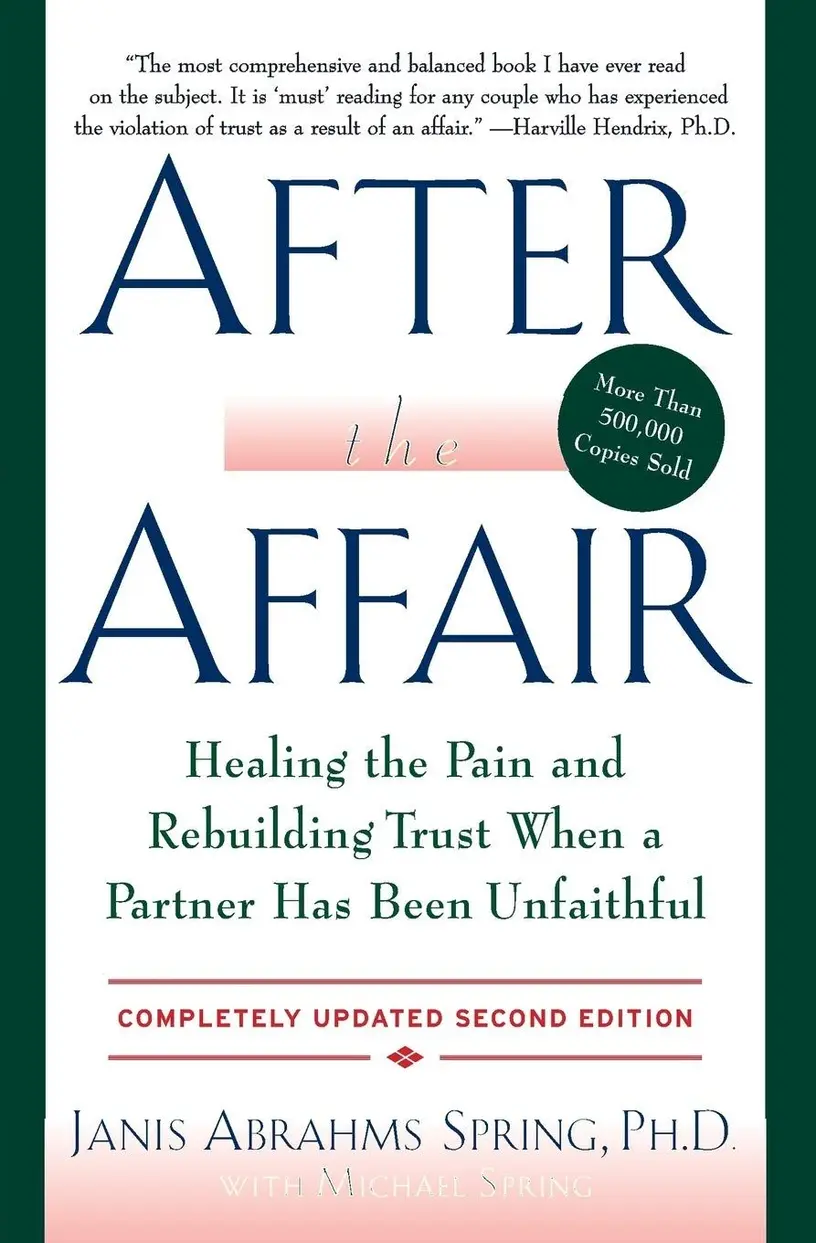
Because of it's rich insights, I often recommend After the Affair: Healing the Pain and Rebuilding Trust When a Partner Has Been Unfaithful by Janis Abrahms Spring (originally published in 1996, with updated editions since, including a third edition around 2020). This is one of the most respected,practical guides out there specifically for couples navigating infidelity—written by a clinical psychologist who's spent decades treating betrayed and unfaithful partners alike. It's compassionate, balanced, and doesn't sugarcoat the devastation while offering real hope and a clear roadmap if both people want to try to heal the relationship.
The book's central premise is that an affair often feels like a "death blow" to the partnership—shattering trust, self-worth, and the sense of safety—but many couples do survive and even emerge stronger. Spring emphasizes that recovery isn't about quick fixes or pretending it never happened; it's a deliberate, staged process that requires honesty, accountability from the unfaithful partner, deep empathy from both sides, and hard work to address what led to the betrayal and rebuild something healthier.
She structures the book around three clear stages of healing, addressing both the "hurt partner" (the betrayed one) and the "unfaithful partner" throughout:
- Stage One: Normalizing the Crisis / Reacting to the Affair — "Is what I'm feeling normal?" This is the raw, immediate aftermath. Spring validates the hurt partner's intense reactions: shock, rage, obsessive thoughts, hypervigilance, grief over multiple losses (self-esteem, sense of reality, sexual exclusivity, future dreams, innocence about the relationship), physical symptoms like insomnia or panic, and that awful feeling of "going crazy." She explains these as normal trauma responses—not overreactions. For the unfaithful partner, she describes their own turmoil: guilt, shame, relief at no longer hiding, confusion, defensiveness, or impatience to "move on." The mismatch in timing and intensity between the two (one in agony, the other wanting to close the chapter) is common and painful. The goal here is mutual understanding: both partners' experiences are real and need space—no minimizing, no rushing.
- Stage Two: Deciding Whether to Recommit — "Should we stay or go?" This is the crossroads chapter. Spring helps couples explore whether rebuilding is possible and desired. She challenges romantic myths (e.g., "true love means one person meets all needs forever") and examines how unrealistic expectations about love, intimacy, and monogamy can contribute to vulnerability. She guides honest reflection: What drew the affair? Were there unmet needs, poor boundaries, unresolved issues? Importantly, she stresses that understanding context doesn't excuse the betrayal—the unfaithful partner owns full responsibility for the choice to step outside the relationship. This stage involves tough questions about forgiveness potential, willingness to change, and whether both can envision a future together. It's okay if the answer is no; sometimes separation is the healthiest path.
- Stage Three: Recovering and Rebuilding — "How do we create a new life together?" If both commit, this is the long work of revitalization: learning from the affair, restoring trust through transparency (e.g., open access to devices if needed, full disclosure without endless details that retraumatize), consistent repair (the unfaithful partner initiating check-ins about the hurt), improving communication, rebuilding emotional and sexual intimacy, and cultivating forgiveness—not as forgetting, but as choosing to let go of resentment while honoring the pain. Spring offers concrete tools: exercises for expressing feelings safely, rebuilding rituals, addressing sexual issues post-betrayal, and preventing future vulnerabilities by creating a more conscious, connected partnership.
Throughout, the tone is even-handed—she speaks directly to both partners without blaming the hurt one or letting the unfaithful one off the hook. Affairs aren't glorified as "wake-up calls," but they can become catalysts for deeper honesty and growth if handled with courage. She also addresses modern twists like online/emotional affairs and tech transparency in later editions.
In therapy, this book is gold because it normalizes the chaos ("You're not crazy—this is trauma") while giving a structured path forward. It reduces isolation, helps partners speak the same language about pain and repair, and reminds everyone that healing isn't linear—setbacks are part of it. Many couples find it validating and hopeful; it shows survival is possible without pretending the wound never existed.
Does this connect to anything you're working through right now—maybe the raw emotions early on, the decision point, or the rebuilding phase? We could look at which stage feels most relevant and talk about how some of these ideas might apply to your situation. It's intense material, but approaching it slowly, with support, makes a big difference.