
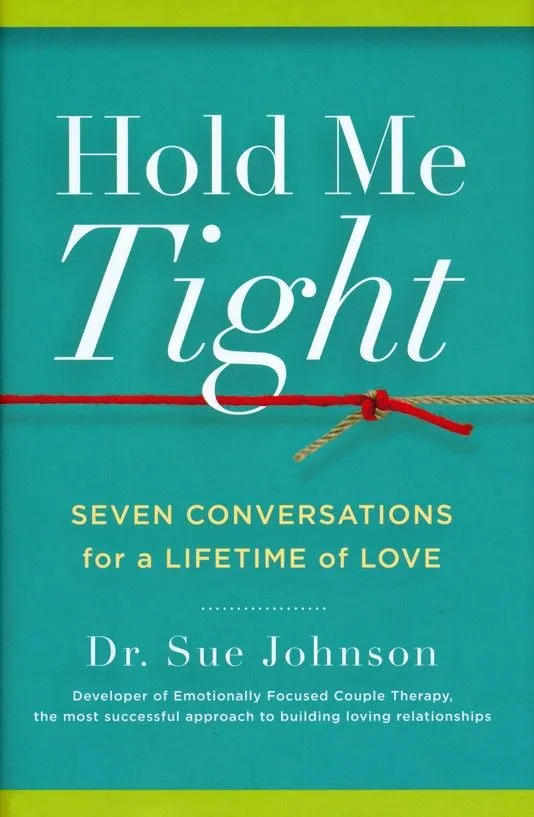
Hold Me Tight: Seven Conversations for a Lifetime of Love by Dr. Sue Johnson is the flagship book for Emotionally Focused Therapy (EFT)—the approach Sue developed and researched extensively. It's one of the most evidence-based couples therapies out there (with high success rates in studies), and the book makes those powerful ideas accessible to everyday couples. Sue's voice is warm, direct, and hopeful; she draws on attachment science, real client stories, and practical guidance to show that love isn't a mystery or just "hard work"—it's a wired-in emotional bond we can strengthen when we understand it right.
The core message flips how most people think about relationships: Romantic love isn't primarily about compatibility checklists, better communication skills, fixing behaviors, or rekindling passion through date nights. Instead, it's an adult attachment bond—much like the secure connection a child needs from a parent for safety, comfort, and exploration. We’re biologically primed to seek a primary person who is emotionally available, responsive, and engaged. When that bond feels secure, we thrive: we're calmer, more resilient, better at handling conflict, and freer to be our authentic selves. When it feels threatened (through distance, criticism, or unmet needs), we go into primal panic—protest (anger, blame, pursuit), withdrawal, or shutdown—which spirals into the negative cycles that trap so many couples.
Sue uses the acronym A.R.E. to capture what makes a secure bond:
- Accessible — Can I reach you? Are you emotionally available when I need you?
- Responsive — Do you tune in to my signals and care about my feelings?
- Engaged — Are you emotionally present and invested in me/us?
When answers to these are "yes" most of the time, partners feel safe to be vulnerable, ask for what they need, and weather life's stresses together. When "no," raw spots get triggered—old fears of abandonment, rejection, or not mattering—and we defend or attack instead of connect.
The heart of the book is seven transformative conversations that guide couples through EFT's process. These aren't abstract talks; they're structured, vulnerable dialogues (with exercises and examples) to help you:
- Recognize the Demon Dialogues — Spot your negative pattern (e.g., pursue-withdraw, criticize-defend, freeze-flee) and see how it creates a vicious cycle where both feel unsafe and unheard.
- Find the Raw Spots — Identify the deep emotional triggers underneath surface fights (e.g., "When you shut down, I feel invisible and terrified you'll leave").
- Revisiting a Rocky Moment — Slow down a recent argument to unpack what really happened emotionally for each of you.
- Hold Me Tight — The pivotal conversation: Share attachment fears and longings vulnerably ("I need to know I'm important to you"), then ask for and receive reassurance and comfort. This creates bonding moments that heal and rebuild trust.
- Forgiving Injuries — Address deeper hurts or betrayals by expressing the impact, hearing the other's regret, and choosing to let go while creating new safety.
- Bonding Through Sex and Touch — Integrate emotional connection into physical intimacy—making sex about emotional closeness rather than performance or avoidance.
- Keeping Your Love Alive — Create rituals, shared dreams, and ongoing check-ins to protect and nurture the bond long-term.
Sue includes real couple examples throughout—showing the "before" stuck cycles and the "after" secure connection—so it feels hopeful and doable. She stresses that EFT isn't about perfect harmony; secure love can handle differences, disagreements, and even wounds because the foundation is emotional safety. It's short-term in therapy (often 8–20 sessions), but the book lets couples start the work at home, slowly and gently.
In therapy terms, this book is incredibly normalizing and empowering: It helps partners stop pathologizing each other ("You're controlling / cold / needy") and see behaviors as desperate attempts to protect the bond when it feels at risk. It reduces shame, builds empathy, and gives a clear map for turning toward each other instead of away. Many couples describe it as life-changing—moving from chronic disconnection or fights to feeling truly "held" and safe with their person.
Does any of this feel familiar—like a particular cycle you get stuck in, or a raw spot that keeps coming up? Maybe the pursue-withdraw dance, or a fear of not being enough? We could look at how the A.R.E. questions play out in your relationship, or even try framing one small conversation from the book if you're interested. It's deep work, but Sue's approach is gentle and profoundly connecting. What stands out to you as we go through this?